

Every licensed builder in Queensland has to take out home warranty insurance on your job. Most owners never see the policy, never read it, and find out what it covers the week something goes wrong. The deadlines are short, so it pays to know them before you need them.
When it applies
Cover is compulsory for residential construction work valued at more than $3,300, counting labour, materials and GST. That includes building a house or granny flat, work inside its envelope, and work attached to it that needs a building approval or plumbing permit, such as decks, stairs, stumps and drainage.
Some work only counts when it's part of a contract for the main job: fencing, landscaping, electrical work, air conditioning, driveways, solar and water heaters. Done on their own, they aren't covered. Neither are commercial buildings, or work for a builder's own spouse or child.
What it covers
- Non-completion: the builder doesn't or can't finish. This only applies to a fixed-price contract that has been validly ended because of the builder's default, or where the builder has died, been deregistered, or gone insolvent and lost their licence. If work hasn't started, QBCC refunds the insurable deposit. If it has, QBCC pays the cost to finish beyond what you still owe under the contract.
- Defective work: the builder doesn't fix defects, structural or not.
- Subsidence or settlement of the building.
- Fire, storm, vandalism or theft damage to unfinished work, once a non-completion claim is accepted. Vandalism and theft need a police report and QBCC pays only the loss over $2,500.
- Accommodation, removal and storage of up to $5,000 if a non-completion claim leaves your home unlivable.
Standard cover is up to $200,000 for each type of loss on a detached house. You can lift it to $300,000 by paying an extra premium within 30 business days of signing, or before work starts if that comes first.
It doesn't cover defects caused by wear and tear or lack of maintenance, flood, landslip, earthquake or erosion, accidental damage, defective products, or design by someone who wasn't suitably qualified. It isn't home and contents insurance.
Claim time limits
Cover lasts 6 years and 6 months from the earliest of signing the contract, paying the premium, or work starting. It can stretch by up to 6 months if the work takes longer than 6 months. Inside that, each claim type has its own clock, and QBCC applies them strictly.
| Claim | When you must notice it | When you must lodge |
|---|---|---|
| Non-completion | Contract must end within 2 years of work starting, or of signing if work never started | Within 3 months after the contract ends |
| Structural defect | Within 6 years 6 months of cover starting | Within 3 months of first becoming aware |
| Non-structural defect | Within 6 months of the work being substantially complete | Within 7 months of the work being substantially complete |
| Fire, storm, vandalism, theft to unfinished work | During the claim period | Within 14 days of the event |
Substantially complete includes the day the final payment is made or, for a new home, the day it's occupied. That non-structural window is the one that catches people. Move in, notice a sticking door in month 5, sit on it until month 8, and the scheme can't help you.
Who pays and when
The licensed contractor who signs the contract with you must collect the premium from you and pay it to QBCC. It's usually built into the price and taken as part of the deposit, and the deposit cap still applies. It must be paid before work starts and within 10 business days of signing. Subcontractors don't pay a separate premium; one premium covers all the work under your contract.
From our side: the premium is a real cost on every job, and a builder who hasn't put it in the quote is either going to find it later or isn't paying it. Ask where it is in the price.
Your claim can also be cut if you pay more than the legal deposit, pay ahead of the schedule, or the contract price is more than 30% under the real value of the work. QBCC's example: a $100,000 contract for $150,000 worth of work has the claim reduced by $50,000.
How to check a policy exists
- Once the premium is paid, QBCC issues a Notice of Cover for the work. Ask your builder for it in the first fortnight after signing.
- If you don't have it, call QBCC on 139 333 with the site address and the builder's licence number.
- Buying a home with recent work? You, or your conveyancing solicitor, can lodge an insurance search on the property through QBCC. It shows whether cover is in force and whether claims have been made.
What owner builders lose
Owner builders can't get cover under the scheme. Work a contractor does for the holder of an owner builder permit isn't covered either. And if you sell within 6 years of completion, you must give the buyer a written warning that the work isn't covered by insurance under the QBCC Act.

That's the main thing you trade away when you owner build. We've set out the whole picture, and when it's worth it, in our owner builder guide.
Modular homes: what the scheme leaves out
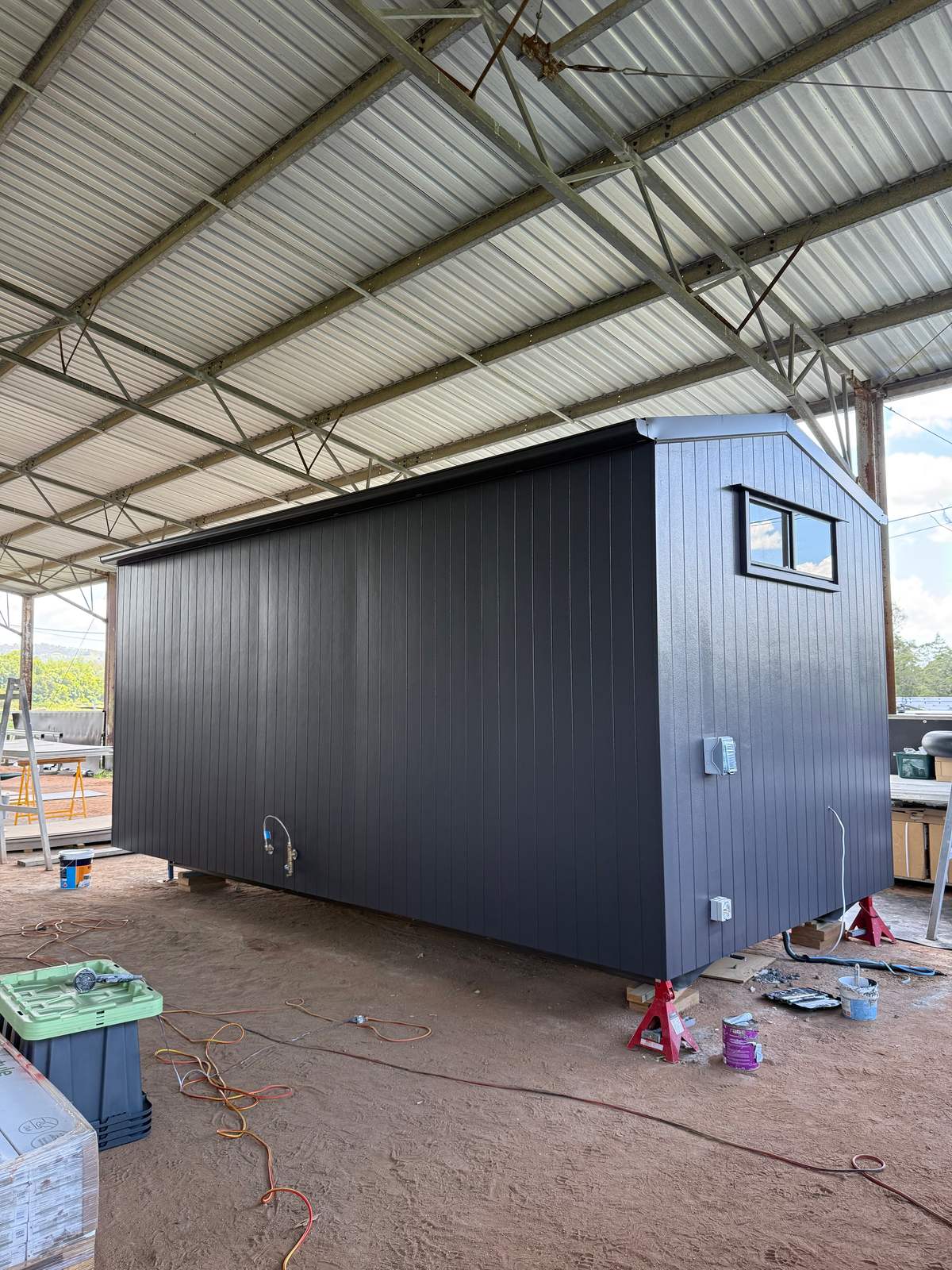
This one surprises people. Under section 67WB of the QBCC Act, a contract only to build a whole home off site isn't insurable work. But QBCC's own A-Z guide says that when a licensed contractor installs a prefabricated home on your land, it is insurable work: the premium is charged on the whole value, including the off-site construction, the transport and the install, and defects in that work are covered. The delivered home is treated as one of the building materials.
So on a modular granny flat, the cover follows the licensed contractor who installs it. If you buy the home from a maker and then install it as an owner builder, there is no home warranty cover on any of it. Ask before you sign who holds the licence on the install and who pays the premium, and read the maker's own warranty terms as carefully as the builder's contract.
- Owner builder or licensed builder for a modular granny flat
- Queensland building contracts, explained clause by clause
- How to check a builder before you sign
- Modular and kit home installs
- Get a quote
- QBCC: What is home warranty insurance
- QBCC: Time limits for cover and claims
- QBCC: Who pays home warranty and when
- QBCC: Queensland Home Warranty Scheme product disclosure
- QBCC: Insurance search on a property
- QBCC: About owner-building
- Queensland Building and Construction Commission Act 1991, part 5 (s 67WB, s 67WC) and s 47
- Queensland Building and Construction Commission Regulation 2018, schedule 6
- QBCC: A-Z guide of insurable building work