

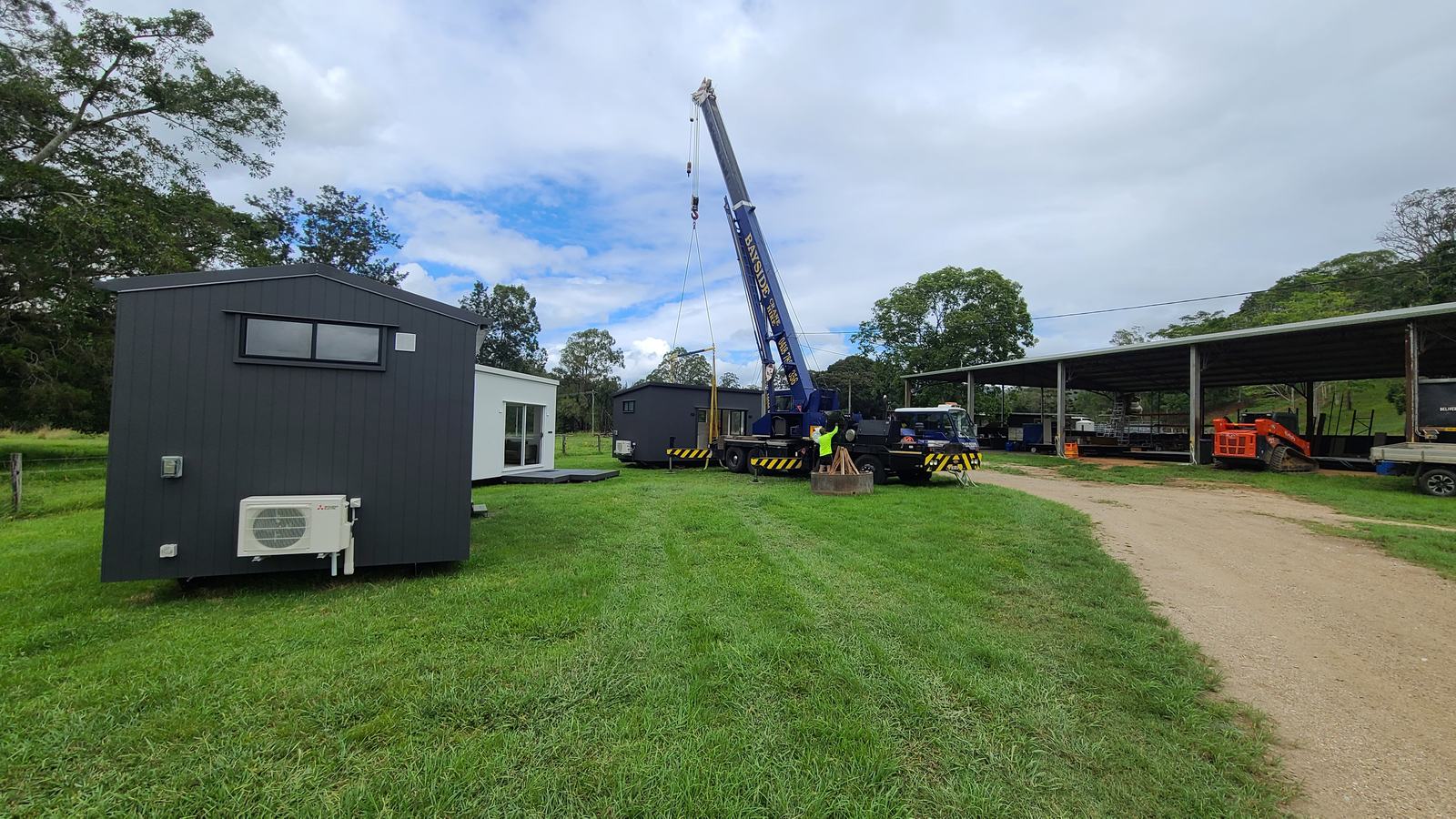
You've picked a modular granny flat. A factory builds it, a truck brings it and a crane lifts it onto your block. Then somebody has to sign as the builder. In Queensland that is either a licensed builder or you, as an owner builder. Who signs changes the price, the paperwork and who carries the risk.
Why we often recommend owner builder for modular
The industry hasn't caught up with modular. A licensed builder who signs a contract for the whole job answers for the whole job. Queensland law writes warranties into every regulated building contract: the materials are good and suitable, the work complies with the law, it's done with care and skill, and the home is fit to live in. A structural breach can be chased for six years after completion.
On a modular install, most of that home was made in a factory we don't run. If we sign as the builder, our licence and our warranties stand behind someone else's work. To carry that risk honestly, we'd have to add a premium to the price.
If you are the owner builder, we do the install as your contractor. We stand behind the work we do on your block. The maker stands behind the module under its own contract with you. No premium.
In numbers: on a typical install, certification and approvals run about $25,000 with you as the owner builder and about $35,000 with a licensed builder signing. The difference is home warranty insurance, the QLeave levy and the builder's margin on the value of a home they didn't build. The install all in usually lands between $70,000 and $140,000, inc GST, on top of the home.
One more thing most people never hear. A contract only to build a home in a factory isn't covered by the home warranty scheme. But once a licensed builder installs that home on your block, QBCC treats the module like building materials delivered to site: the premium is charged on the factory build, the transport and the install together, and defects are covered. So the builder who signs is insuring, and answering for, a home they didn't make. That is the risk the premium pays for.
What the permit takes
- You need a permit for residential building work on your own land valued at more than $11,000, including GST. Value means materials and labour at trade prices, even if a mate does the work for free.
- At least one applicant must finish an approved owner builder course before applying. QBCC accepts a course up to 5 years old. QBCC licensees are exempt.
- In most cases you can hold one permit every 6 years. Exemptions exist for serious medical conditions or severe financial hardship, and they are narrow.
- You must be on the title, a director of the company that owns the land, or a lessee with the owner's written agreement.
- No work on site, not even excavation, until the permit is issued. Your certifier can't sign off the plans until they have seen it.
- QBCC says processing usually takes within 30 working days. Put that in your timeline before you book a delivery date.
- The permit can't be used for a multiple dwelling, meaning one building with two or more homes in it.
What you give up
- Home warranty insurance. Owner builders can't get cover under the Queensland Home Warranty Scheme, and work a contractor does for a permit holder isn't covered either.
- Contract protections. Under Schedule 1B of the QBCC Act, a contract between an owner builder and a building contractor is not a domestic building contract. The deposit caps, the cooling-off right and the statutory warranties in that schedule don't apply by law. Your protection is whatever the written contract says.
- A clean title for a while. A notice of the permit goes on your title through Titles Queensland and stays for 7 years.
- A simple sale. Sell within 6 years of completion and you must give the buyer a notice before they sign: the details of the work, the permit holder's name, and the warning that the work is not covered by insurance under the QBCC Act. You give two copies and the buyer signs one and hands it back. Skip it and the law treats you as having promised the work was properly done.
- Your time. You are the head contractor. You engage and coordinate the trades, put up a sign showing your permit number, run site safety, keep the paperwork and pay on time.
If you might sell within six years, tell your conveyancing solicitor about the permit before you list. The notice has to be in the buyer's hands before they sign, and that is the solicitor's paperwork to get right.
Trades that still need their own licence
A permit lets you carry out or manage building work on your own land. It doesn't license you for trade work.
- Plumbing, drainage and gasfitting: a licensed plumber, drainer or gasfitter, whatever the value.
- Electrical: a licensed electrician. Electrical work licences come from the Electrical Safety Office, not QBCC.
- Chemical termite management: licensed, whatever the value.
- Fire protection and mechanical services: you can do up to $1,100 of fire protection work, and no mechanical services work at all.
- Asbestos: you can't remove more than 10 square metres without an asbestos removal licence, and you need an asbestos awareness course.
- Building work: any contractor you hire must hold the right QBCC contractor's licence for their part of the job.
How the install contract works
With you as owner builder, three parties each own one part of the job.
- You hold the permit, and you deal with the certifier and the module maker.
- The maker builds the home under its own contract with you, with its own warranty terms. Read them before you pay a deposit.
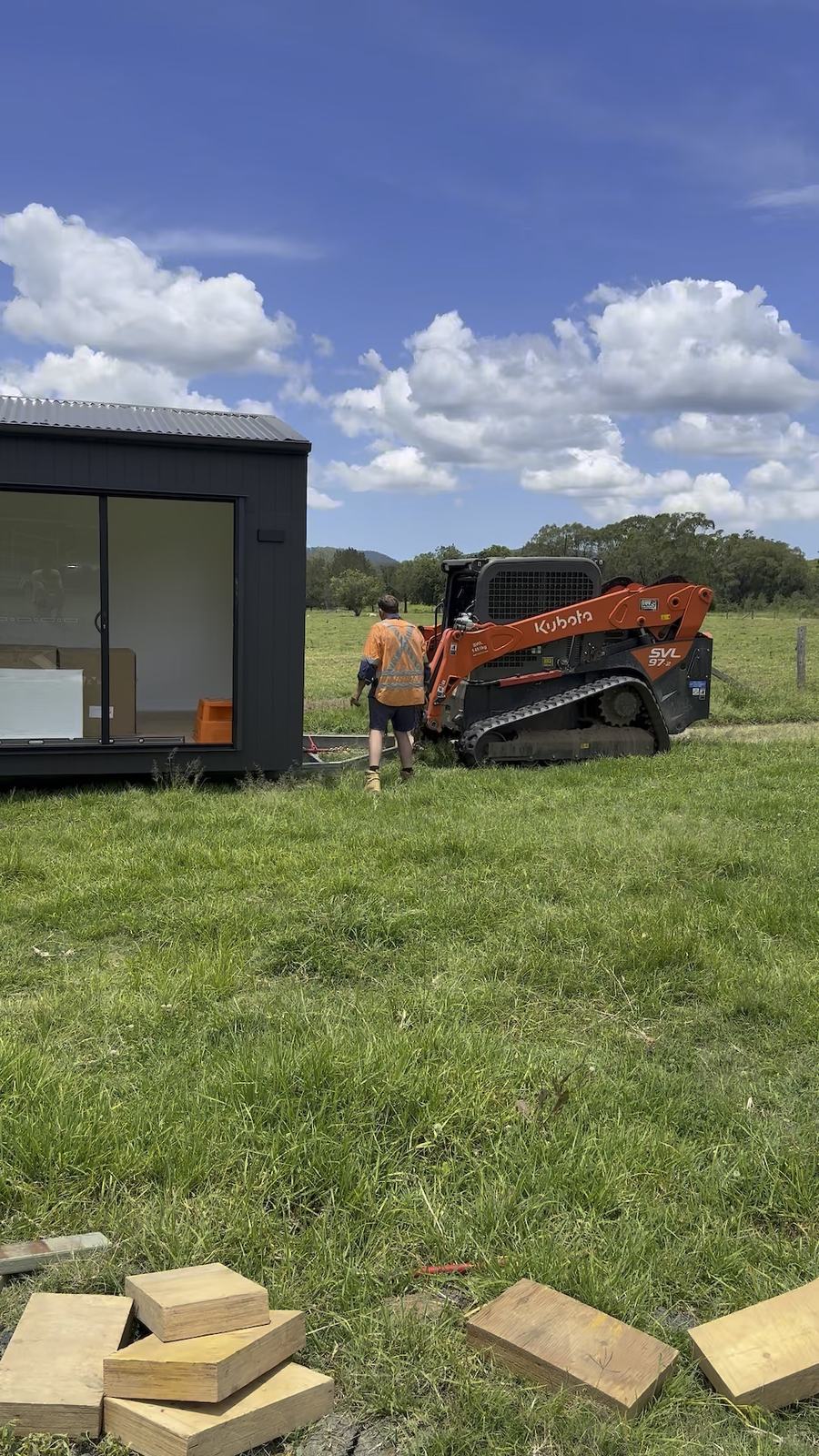
- We install it as your contractor, anywhere in South East Queensland, under the licence that covers the work. The scope is listed item by item: set-out, footings, crane day and set-down, joining and weatherproofing, and the licensed trades for the connections, with each price in writing.
The law doesn't force a formal contract on an owner builder job. We write one anyway: a fixed scope, payments tied to work done on your block, variations in writing before the work, and a defects list at handover. It stops arguments before they start. If you want someone on your side to read it, a building and construction lawyer can review a contract like this in an hour or two. A general practice solicitor is the wrong person for it.
Money and lenders
Lenders set their own rules for construction loans, and we couldn't find a public source on how they treat owner builder jobs, so we won't guess. Before you apply for the permit, ask your lender in writing two things: will they fund an owner builder modular install, and how will they release the money against the factory build and the site work. If the answer is no, you have your decision.
When a licensed builder is the right call
- Your lender will only fund the job with a licensed builder.
- You have held an owner builder permit in the last 6 years.
- You might sell within 6 years and don't want the warning notice in the sale.
- You don't have the time to run trades, safety and inspections.
- You want the statutory contract protections and home warranty cover on the site work.
- The job is more than an install: a big cut and fill, retaining walls, or an extension to the main house as well.
In any of those cases we'll sign as the builder and price the premium in, out loud, so you can compare. Either way, it's your call, made with your eyes open.
- Modular and kit home installs
- Queensland building contracts, explained clause by clause
- QBCC home warranty insurance: what it covers and who pays
- How to check a builder before you sign
- What a granny flat costs in SEQ
- Get a quote
- QBCC: About owner-building
- QBCC: Apply for an owner-builder permit
- QBCC: Responsibilities of an owner-builder
- QBCC: Sell an owner-builder property
- QBCC: When you need a licence
- Business Queensland: Electrical licences
- Queensland Building and Construction Commission Act 1991 (s 43D, s 44B, s 47, s 67WB, schedule 1B)
- Queensland Building and Construction Commission Regulation 2018 (s 20, s 21, s 22)
- QBCC: A-Z guide of insurable building work